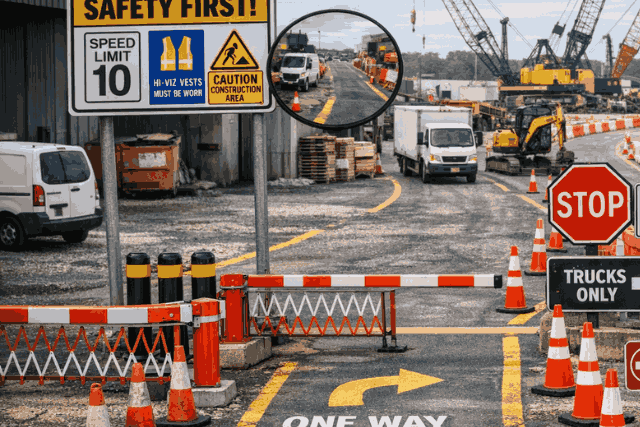
High-traffic areas—such as construction sites, car parks, warehouses, and public access zones—require careful planning and the right safety equipment to manage movement effectively.
With constant interaction between vehicles, machinery, and pedestrians, these environments can quickly become hazardous without proper control measures in place.
Using the right combination of equipment helps create a safer, more organised, and efficient site.
Why High-Traffic Areas Need Extra Safety Measures
Busy sites often experience:
- Increased risk of collisions
- Limited visibility in active zones
- Confusion due to overlapping traffic movement
- Higher likelihood of accidents involving pedestrians
Implementing proper safety equipment ensures smoother flow and reduces potential risks.
1. Clear and Visible Safety Signage
Signage is essential for guiding behaviour and maintaining order in high-traffic environments.
Key signage to include:
- Directional signs – guide vehicle and pedestrian flow
- Speed limit signs – control vehicle movement
- Warning signs – highlight hazards and risks
- Restricted access signs – prevent entry into unsafe areas
Well-placed signage helps reduce confusion and improves overall site awareness.
2. Traffic Cones and Delineators
Traffic cones and delineators are essential for defining lanes and guiding movement.
Benefits:
- Create clear pathways for vehicles and pedestrians
- Highlight hazards or restricted zones
- Easily adjustable as site conditions change
They are ideal for both temporary and long-term traffic management.
3. Barriers and Safety Fencing
Barriers provide a physical separation between different areas, helping to protect both workers and the public.
Common uses:
- Separating pedestrian walkways from vehicle traffic
- Securing hazardous or restricted zones
- Managing crowd movement in public areas
Options such as barrier mesh, plastic barriers, and chains can be used depending on site requirements.
4. Bollards for Protection and Control
Bollards are a reliable solution for protecting infrastructure and controlling vehicle access.
Key applications:
- Protecting building entrances and equipment
- Preventing vehicle intrusion into pedestrian areas
- Defining boundaries in high-traffic zones
They provide a strong visual and physical barrier where needed.
5. Convex Mirrors for Improved Visibility
Blind spots are common in busy environments, especially around corners, intersections, and entry points.
Benefits:
- Improve visibility in hard-to-see areas
- Reduce the risk of collisions
- Help drivers and pedestrians anticipate movement
Convex mirrors are a simple but highly effective safety solution.
6. Wheel Stops for Controlled Parking
In car parks and loading zones, wheel stops help maintain order and prevent over-parking.
Benefits:
- Keep vehicles aligned within designated areas
- Prevent encroachment into walkways or restricted zones
- Protect structures and equipment
They are particularly useful in busy parking environments.
7. Safety Lighting and Reflective Products
Visibility becomes even more critical in high-traffic areas, especially during low-light conditions.
Recommended solutions:
- Solar or hazard lights – improve visibility at night
- Reflective signage and markers – enhance awareness
- Illuminated safety equipment – highlight key areas
Proper lighting ensures that hazards and pathways remain clearly visible.
Bringing It All Together
No single product can manage a high-traffic environment effectively. The best results come from combining multiple safety solutions:
- Signage provides direction
- Cones and delineators guide movement
- Barriers and bollards offer protection
- Mirrors and lighting improve visibility
Together, these create a safer and more controlled site.
Built for Australian Conditions
Safety equipment used in high-traffic areas must withstand:
- Heavy daily use
- Harsh weather and UV exposure
- Demanding environments
Durable, high-quality products ensure long-term performance and reliability.
FAQs
What is the most important safety equipment for high-traffic areas?
Clear signage and traffic control equipment are essential for guiding movement and reducing risk.
How can I improve visibility on a busy site?
Use reflective signage, safety lighting, and convex mirrors in key areas.
Are bollards necessary in high-traffic areas?
Yes, they help protect pedestrians and infrastructure while controlling vehicle access.
What equipment is best for temporary traffic control?
Traffic cones, delineators, and portable signage are ideal for flexible setups.
Conclusion
Managing high-traffic areas requires more than just basic planning—it requires the right equipment.
By using a combination of signage, traffic control equipment, barriers, and visibility solutions, you can improve safety, reduce risks, and maintain efficient operations across busy sites.
Explore Safety Equipment Solutions with Civil Products WA
Browse a complete range of traffic control equipment, signage, bollards, and safety solutions from Civil Products WA designed for performance, durability, and compliance across Australian conditions.
Contact Us