Traffic cones are an essential part of safety and traffic management across roads, mine sites, warehouses, and public spaces. They help guide vehicles and pedestrians, flag hazards, and keep everyone moving safely around a work area.
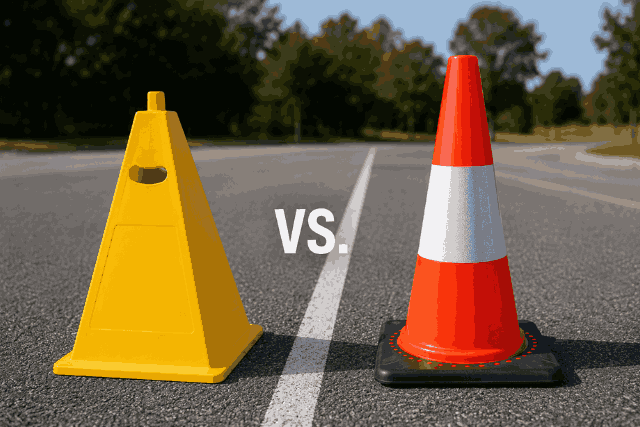
While standard traffic cones are the ones most people picture, pyramid cones play just as important a role — particularly in car parks, warehouses, mine site facilities, and other areas where people are moving around on foot. Understanding the difference between the two can help you pick the right cone for your site, whether that’s a suburban roadworks job or a busy mining operation.
What Are Standard Traffic Cones?
Standard traffic cones are tall, highly visible cones built for traffic control and roadside safety. They’re typically made from durable PVC and fitted with reflective sleeves so they stand out day or night — a must on any site where vehicles are moving at speed.
Standard traffic cones are commonly used for:
- Roadworks and construction sites
- Mine site haul roads and vehicle routes
- Traffic management
- Lane closures
- Temporary road hazards
- Infrastructure and maintenance projects
Their height and reflective properties make them ideal wherever vehicles travel at moderate to high speeds — including mining and civil sites where heavy machinery shares the road with light vehicles.
What Are Pyramid Cones?
Pyramid cones are compact, four-sided safety markers designed for low-speed, high-foot-traffic environments. Their stable base and lightweight design make them easy to transport, stack, and set up quickly — handy when you need to reconfigure a space on the fly.
Pyramid cones are commonly used for:
- Car parks
- Warehouses and site sheds
- Mine site amenities and administration areas
- Shopping centres
- Schools
- Pedestrian walkways
- Events and crowd management
Available in a range of colours, pyramid cones are often used to flag hazards, guide foot traffic, or temporarily reserve an area — think marking off a spill in a warehouse or cordoning a walkway near mine site offices.
Key Differences Between Pyramid Cones and Standard Traffic Cones
1. Height and Visibility
Standard Traffic Cones
- Taller profile for greater visibility
- Reflective sleeves improve visibility in low-light conditions
- Suited to roadways, mine haul roads, and vehicle traffic
- Pyramid Cones
- Lower profile
- Designed for close-range visibility
- Best suited to pedestrian and low-speed environments
2. Primary Applications
Standard Traffic Cones are ideal for:
- Road construction
- Mining and civil infrastructure projects
- Traffic control
- Road maintenance
- Highway works
Pyramid Cones are better suited for:
- Car parks
- Schools
- Warehouses and mine site facilities
- Public buildings
- Event management
Selecting the right cone comes down to the environment and the level of vehicle traffic you’re managing.
3. Stability and Portability
Both cone types are lightweight and quick to deploy, but they suit different jobs. Standard traffic cones often feature weighted rubber bases for strong stability outdoors — useful in exposed conditions on a mine site or highway. Pyramid cones are compact and easy to stack, making them ideal for temporary or frequently changing layouts, like a warehouse floor plan that shifts week to week.
4. Visibility Requirements
Where vehicles travel at higher speeds or visibility is limited — think mine haul roads, highways, or low-light roadworks — standard traffic cones offer greater safety through their height and reflective sleeves. In slower, foot-traffic-heavy environments, pyramid cones provide sufficient visibility while staying practical and easy to manage.
Which Cone Should You Choose?
The right choice comes down to your application.
Choose standard traffic cones if you need:
- Roadside or mine site traffic control
- High-visibility safety equipment
- Temporary lane management
- Construction, civil, or mining infrastructure applications
Choose pyramid cones if you need:
- Temporary hazard marking
- Pedestrian guidance
- Car park management
- Warehouse or mine site facility safety
- Event and public area management
Many sites — especially larger mining and civil operations — use both cone types together to manage different areas of the same project: standard cones on haul roads and access points, pyramid cones around amenities, workshops, and pedestrian zones.
Built for Australian Conditions
Whether you’re using pyramid cones or standard traffic cones, durability matters — especially on mine sites and regional projects where equipment is exposed to heat, dust, and UV for long stretches.
Quality traffic cones should offer:
- UV resistance
- Long-lasting colour retention
- Reliable performance in demanding environments, from suburban roadworks to remote mine sites
- Choosing durable products helps reduce maintenance and replacement costs while keeping your site safe day in, day out.
Conclusion
Although pyramid cones and standard traffic cones serve a similar purpose, they’re built for different environments. Standard traffic cones deliver maximum visibility for roadworks, mining, and traffic management, while pyramid cones offer a practical solution for pedestrian areas, car parks, warehouses, and mine site facilities.
By choosing the right cone for the job — or combining both where a site calls for it — you can improve safety, keep traffic and foot flow moving smoothly, and create a more organised work environment.
Explore Traffic Cone Solutions
Looking for the right traffic cones for your next project?
Browse a complete range of standard traffic cones, pyramid cones, and traffic management products designed for durability, visibility, and reliable performance across Australian conditions.
👉 Explore the range at: 🌐 https://www.civilproducts.com.au/
FAQs
What are pyramid cones used for? Pyramid cones are commonly used in car parks, warehouses, schools, shopping centres, and public areas to mark hazards and guide pedestrian movement.
Are pyramid cones suitable for roadworks? Pyramid cones are best suited to low-speed environments. Standard traffic cones are recommended for roadworks and traffic control applications.
Why do standard traffic cones have reflective sleeves? Reflective sleeves improve visibility during night-time and low-light conditions, helping drivers identify hazards from a greater distance.
Can pyramid cones and standard traffic cones be used together? Yes. Many projects use standard traffic cones for vehicle traffic management and pyramid cones for pedestrian areas or temporary hazard marking.
Contact Us for Enquiries