
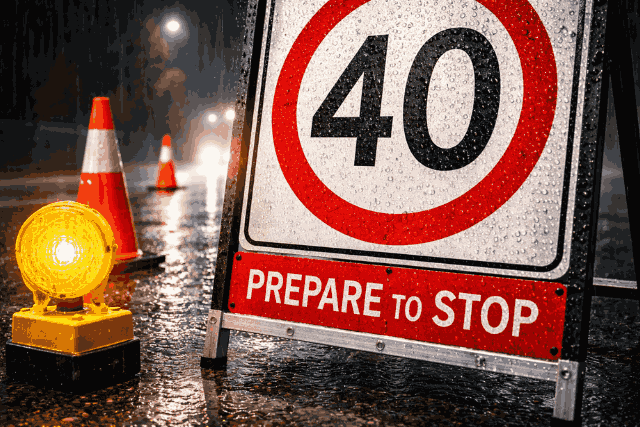
Wet weather can significantly increase risks across worksites, car parks, and public areas. Reduced visibility, slippery surfaces, and changing ground conditions can quickly turn a safe environment into a hazardous one.
Preparing your site with the right equipment ensures continued safety, clear communication, and minimal disruption—even in challenging weather conditions.
Why Wet Weather Preparation Matters
Rain and wet conditions introduce several safety concerns:
- Reduced visibility for drivers and pedestrians
- Slippery surfaces increasing the risk of slips and collisions
- Water pooling that can obscure hazards
- Unstable ground conditions in construction areas
Having the right safety measures in place helps maintain control and prevent incidents.
1. High-Visibility Signage
Clear signage becomes even more critical in wet weather, where visibility is reduced.
Recommended signage:
- Reflective road and safety signs – improve visibility in low light and rain
- Warning signs (Slippery Surface, Caution Wet Floor) – alert pedestrians and drivers
- Directional signage – maintain clear traffic flow
Using reflective materials ensures signs remain visible even in heavy rain or low-light conditions.
2. Traffic Cones and Delineation
Traffic cones and delineators help guide vehicles and pedestrians safely through wet or hazardous areas.
Benefits:
- Clearly mark restricted or slippery zones
- Redirect traffic away from flooded or unsafe areas
- Maintain organised movement across the site
Their flexibility makes them ideal for quickly adapting to changing conditions.
3. Barrier Mesh and Temporary Fencing
Wet weather can create unstable or hazardous zones that need to be restricted.
Common uses:
- Blocking off flooded or muddy areas
- Securing construction zones with softened ground
- Preventing access to unsafe pathways
Barrier mesh and fencing provide a clear visual boundary while maintaining site organisation.
4. Anti-Slip and Ground Safety Measures
Slippery surfaces are one of the biggest risks during wet weather.
Key solutions:
- Anti-slip surfaces or treatments in high-traffic areas
- Floor signage to warn of wet conditions
- Matting or temporary покрытия in entry points and walkways
These measures help reduce slips and falls in both indoor and outdoor environments.
5. Wheel Stops and Parking Control
In wet conditions, vehicle control becomes more difficult—especially in car parks and loading zones.
Benefits:
- Prevent vehicles from overextending into walkways
- Maintain safe spacing between parked vehicles
- Reduce the risk of collisions in slippery conditions
Wheel stops help keep vehicle movement predictable and controlled.
6. Safety Lighting and Reflective Products
Rain often comes with low visibility, especially during early mornings, evenings, or storms.
Recommended solutions:
- Solar or hazard lights for increased visibility
- Reflective markers and tapes on equipment and barriers
- Illuminated signage in high-risk zones
Improved visibility allows drivers and workers to react quickly and safely.
7. Drainage Awareness and Site Planning
While equipment is essential, proper planning also plays a key role.
Consider:
- Identifying areas prone to water pooling
- Keeping access points clear and visible
- Adjusting layouts to avoid high-risk zones
Combining planning with the right equipment ensures a more resilient and safer site.
Bringing It All Together
Effective wet weather preparation relies on multiple safety elements working together:
- Signage improves awareness
- Cones and barriers guide and restrict movement
- Anti-slip measures reduce fall risks
- Lighting and reflective products enhance visibility
Together, these create a safer and more controlled environment, even in challenging conditions.
Built for Australian Conditions
Equipment used outdoors must withstand:
- Heavy rain and moisture exposure
- UV and temperature changes
- Ongoing wear in demanding environments
Durable, high-quality products ensure long-term performance and reliability.
Conclusion
Wet weather doesn’t have to compromise safety. By preparing your site with the right combination of signage, barriers, traffic control equipment, and visibility solutions, you can maintain safe operations and reduce risks—even in unpredictable conditions.
Explore Safety Solutions for All Conditions
Preparing for changing weather?
Browse a complete range of safety signage, traffic control equipment, and site solutions designed for durability, visibility, and performance across Australian conditions.
👉 Explore the range at our Shop
Contact us for any Enquiries:
Contact UsFAQs
What is the biggest risk during wet weather on site?
Reduced visibility and slippery surfaces are the most common hazards.
Are reflective signs necessary in wet conditions?
Yes, reflective signage significantly improves visibility in rain and low-light environments.
How can I reduce slip hazards on site?
Use anti-slip surfaces, warning signage, and proper drainage planning.
What equipment is essential for wet weather safety?
Signage, cones, barriers, lighting, and anti-slip measures are key components.